Media Summary: This is just a few minutes of a complete course. Get full What's the difference between literal and figurative language? In this 6th-grade English language arts (ELA) The two task cards at the end of this video are taken from an excellent resource, Five Senses
Descriptive Lesson 3 - Detailed Analysis & Overview
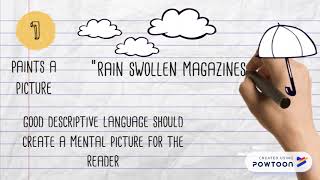
This is just a few minutes of a complete course. Get full What's the difference between literal and figurative language? In this 6th-grade English language arts (ELA) The two task cards at the end of this video are taken from an excellent resource, Five Senses We hope you enjoyed this video! If you have any questions please ask in the comments. In this video, you will learn how to write an introduction for your personal narrative story. We discuss different strategies, such as ... There are some other ways and synonyms for the word "because" that we often use to give arguments, and in today's class we'll ...
Let's Learn English with Anna! is a new course to teach American English to children between 8 and 12 through asking – and ... Week 2 lesson 3 Descriptive Writing - teacher model In this 6th-grade English language arts (ELA) Try Lingoda with an exclusive discount of up to 40% off with my link: *Link automatically ... In this video, we're going to talk about some important concepts for modeling in SketchUp free, like using components to save time ...