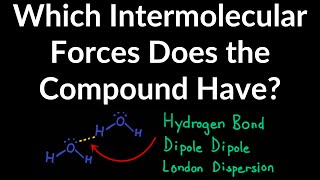
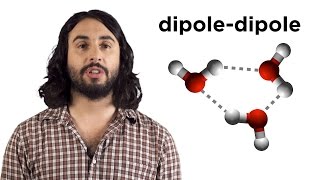
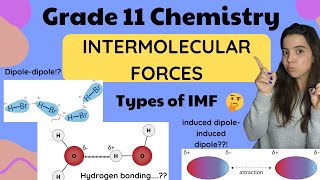
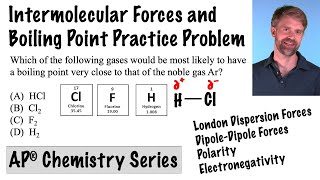
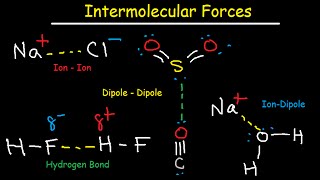
Media Summary: In our class recently we've been talking about Why do different liquids boil at different temperatures? It has to do with how strongly the molecules interact with each other ... In this video we begin a series on how to tell if a molecule is polar. A polar molecule requires a polar bond and asymmetry.
Identifying Intermolecular Forces Real Chemistry - Detailed Analysis & Overview
In our class recently we've been talking about Why do different liquids boil at different temperatures? It has to do with how strongly the molecules interact with each other ... In this video we begin a series on how to tell if a molecule is polar. A polar molecule requires a polar bond and asymmetry. In this lesson we look at the different types of In this video I'm going to give you some tips for solving the Alex problem called Courses on Khan Academy are always 100% free. Start practicing—and saving your progress—now!